
Beyond Literal Translation: Crafting Cross-Cultural Narratives for Art Interpretation
In the realm of museums and tourist attractions, overcoming language barriers for international visitors is a persistent challenge. While bilingual or multilingual translation tools, such as the audio guides at the Vancouver Museum featuring English, French, and Mandarin, are common solutions, their approach often involves a direct, word-for-word translation of original narratives.
Let's consider a prominent example: Andy Warhol's "Campbell's Soup Cans" at the Museum of Modern Art (MoMA) in New York. The English commentary (excerpt below) provides a standard interpretation:
"This work consists of 32 separate canvases. And in fact, at the point at which Andy Warhol made these, these were the 32 kinds of Campbell's soup that you could find on the shelf in the supermarket.
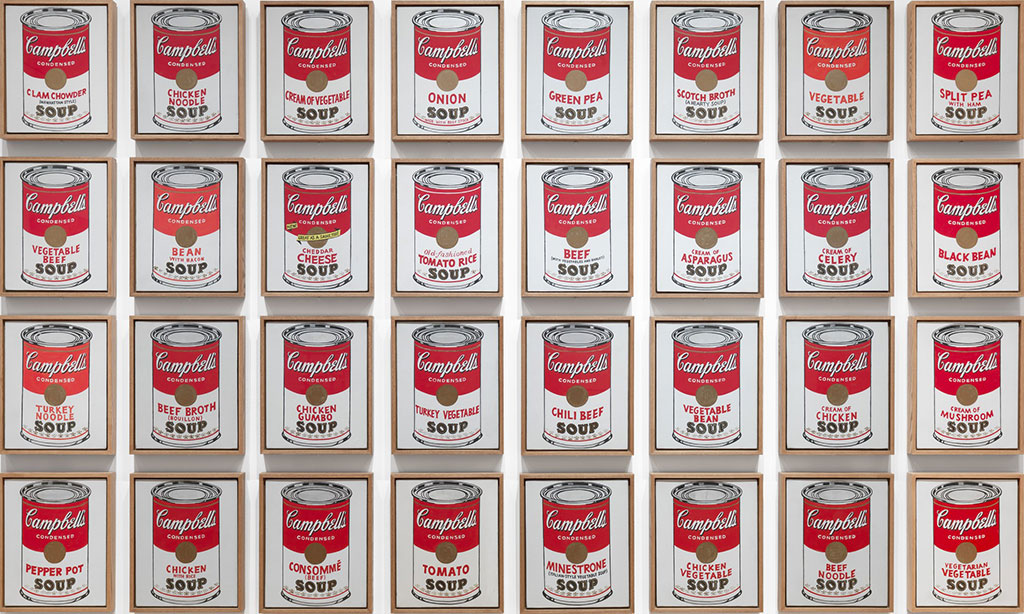
One of the things that Warhol became interested in in the early 1960s was the idea of thinking about painting in terms of repetition rather than in terms of uniqueness. So for this he would use new processes including silk screening, rubber stamping, as well as painting by hand. He would project a drawing of the soup can onto the canvas in order to make sure that each one was done exactly alike. There's nothing here at all that's trumpeting the originality of the artist, the self-expression of the artist."
Its French counterpart reads as a direct translation:
"Cette œuvre est composée de 32 toiles distinctes. À l’époque où elle a été réalisée par Andy Warhol, on pouvait trouver 32 variétés de Soupe Campbell disponibles dans les rayons des supermarchés. Au début des années 1960, Warhol a commencé à envisager la peinture sous l’angle de la répétition plutôt que de la singularité. Pour ce faire, il a employé de nouvelles techniques comme la sérigraphie, l’encrage par tampon, ou la peinture à la main. Il projetait un dessin de la boîte de soupe sur la toile pour s’assurer que chacune d’entre elles serait réalisée de la même façon. Rien ici ne vient mettre en valeur l’originalité de l’artiste ou son expression personnelle."
While the French translation is linguistically excellent, it often falls short for visitors from different cultural backgrounds due to several key issues:
Issue 1: Cultural Resonance of "Campbell's Soup"
For Anglo-American visitors, Campbell's Soup evokes a sense of nostalgia, a ubiquitous symbol of everyday life and consumer culture. Warhol's use of it often elicits an immediate, knowing smile – "Ah, that soup can!" For French visitors, however, while Campbell's is available, French culinary culture prides itself on fresh ingredients, artisanal cooking, and regional specialties. Canned soup in France is often associated with convenience food, perhaps for students or bachelors, and is generally not a source of national pride. Therefore, French visitors may require more context to grasp why such a commonplace, "non-artistic" item would be elevated to artistic status.
Issue 2: Interpretation of "Repetition rather than Uniqueness"
In the English (especially American) context, Pop Art emerged as a rebellion against Abstract Expressionism's emphasis on the artist's personal emotion and unique brushwork. Highlighting "repetition" and "non-uniqueness" is readily understood as an embrace of mass culture, industrial production, and depersonalization, reflecting the standardized, reproducible goods of the "American Dream." Visitors might directly link this to consumerism and the proliferation of mass-produced goods.
In French, however, "singularité" (uniqueness/singularity) carries significant philosophical and aesthetic weight. From the Renaissance to Romanticism and Modernism, French art has consistently emphasized the irreproducibility of artworks and the originality of the artist's creation. "Repetition" in French culture might first bring to mind industrial production, assembly lines, and even a hint of artistic devaluation. Thus, "repetition rather than uniqueness" could be interpreted as the "complete disappearance of art," leading French visitors to view the work as "anti-art" rather than "new art," potentially even provoking moral resistance: "Is this mocking art, or mocking us?"
Issue 3: Understanding "Silk Screening" vs. "Sérigraphie"
The English text mentions "silk screening" to convey Warhol's subversive use of a commercial technique to "invade" the art museum. However, in the French art market, "sérigraphie" is often synonymous with signed, limited-edition prints, commanding high prices. This creates cognitive dissonance for French audiences: "Wait, isn't silkscreening a sophisticated artistic medium? How is it like printing supermarket labels?"
Consequently, a native French-speaking visitor, hearing this translated commentary, may experience cultural filtering and reinterpretation. While the English and French texts are almost word-for-word, the cultural schema of the recipient (the visitor) reconstructs meaning, leading to "same words, different understanding."
The Outcome: French visitors might conclude: "Warhol is criticizing the emptiness and vulgarity of American culture, unlike the sophistication and originality of French art." This stands in stark contrast to the Anglo-American audience's sense of complicity – "we swim in consumerism, and we are also consumed by it."
Introducing XBIT Tech's Cross-Cultural Contextual Interpretation
To address these challenges, XBIT Tech proposes a new approach to interpretive narration: Cross-Cultural Contextual Interpretation. This method is designed for deeply elucidating artworks and their underlying meanings to visitors from diverse cultural backgrounds.
What is Cross-Cultural Contextual Interpretation?
- Personalized Storytelling: Adapting the focus, cultural allusions, and mode of expression based on the visitor's nationality, known interests, and even real-time emotional state. For example, when explaining American Revolutionary War sites to British visitors, the interpretation might emphasize the political backgrounds and cultural conflicts between the two nations. For Japanese visitors at World War II memorials, the wording would be carefully chosen, perhaps highlighting themes of peace and reconciliation.
- Cross-Cultural Comparison and Connection: When introducing specific artifacts or historical events, proactively drawing comparisons or connections to similar concepts, events, or values within the visitor's own culture. This helps build bridges of understanding. For instance, explaining the American pioneering spirit might be analogized with China's ancient Silk Road exploration or Europe's Age of Discovery.
- Avoiding Cultural Misunderstandings and Taboos: Understanding potential sensitivities in different cultures regarding specific gestures, colors, numbers, symbols, or even tones of voice, ensuring the digital persona's expression is appropriate and respectful in any cultural context. For example, mentioning death or certain historical traumas requires extreme caution in some cultures.
- Emotional Resonance and Cultural Experience: By understanding cultural differences, interpretation can more precisely evoke emotional resonance in visitors. For instance, when narrating immigration stories, it can adjust its tone and emphasis based on the visitor's immigration background, fostering a sense of understanding and connection.
Steps for "Cross-Cultural Contextual Interpretation":
- Identify Visitor Background: Ability to identify the visitor's nationality, language, and infer their general cultural background and cognitive framework.
- Tailored Interpretation: Not providing static, generic information, but adjusting the angle, depth, and emotional emphasis of the explanation based on the visitor's cultural background.
- Referencing Appropriate Cultural Touchstones: Ability to cite historical figures, events, or cultural concepts from the visitor's own culture that are more easily understood and resonate, for analogy or contrast.
- Highlighting Cultural Connections or Differences: Consciously pointing out connection points between the landmark and the visitor's own culture (e.g., for French visitors) or significant differences (e.g., for American visitors), thereby deepening understanding.
- Enhancing Emotional Resonance: Making visitors feel "understood" by the interpreter, thus making it easier to form an emotional connection with the cultural heritage being guided, leading to a deeper experience.
- Real-time Contextual Dialogue: When visitors ask questions, the interpreter can not only answer the question itself but also infer the cultural queries or potential interests behind the questioner, providing deeper, more insightful information. For example, when a Middle Eastern visitor inquires about details of a religious building, the digital persona can understand their potential deeper interest in religious rituals or doctrines, thus offering more specialized theological explanations.
Let's apply the "Cross-Cultural Contextual Interpretation" approach to rewrite the commentary for Andy Warhol's "Campbell's Soup Cans," targeting a Quebecois audience.
French (Quebecois-tailored): "Bonjour et bienvenue devant Boîtes de soupe Campbell d’Andy Warhol, une œuvre composée de 32 toiles, chacune illustrant une variété de soupe Campbell que l’on trouvait dans les supermarchés américains en 1962. Pour vous, Québécois, imaginez les tablettes de Provigo ou Metro avec des produits comme la soupe Habitant ou le sirop d’érable Coureur des Bois – des icônes du quotidien qui définissent une culture. Warhol, lui, choisit un symbole américain pour interroger ce que l’art représente dans un monde de consommation.
Dans les années 1960, Warhol explore la répétition, défiant l’idée d’un art unique et personnel, comme celui des peintres canadiens-français tels que Jean-Paul Riopelle, dont les œuvres vibrent d’émotion brute. Il utilise des techniques comme la sérigraphie, un peu comme les affiches publicitaires qu’on voyait pour la bière Molson à l’époque, projetant l’image des boîtes pour qu’elles soient toutes identiques. Cela peut rappeler, à nous Québécois, les débats sur la préservation de notre identité culturelle face à l’uniformisation nord-américaine, un thème cher à des figures comme Pierre Vallières.
Cette œuvre ne met pas en avant l’originalité de l’artiste, mais reflète une société où la consommation domine. Pour vous, cela pourrait évoquer les tensions entre notre héritage francophone, avec sa fierté artisanale, et l’influence de la culture de masse américaine. En regardant ces boîtes, vous pourriez ressentir un écho de notre propre lutte pour rester distincts, tout en étant fascinés par l’audace de Warhol, qui transforme le banal en art."
Analysis of the Quebecois-Tailored Interpretation:
Personalized Storytelling and Localized Connection:
"Pour vous, Québécois, imaginez les tablettes de Provigo ou Metro avec des produits comme la soupe Habitant ou le sirop d’érable Coureur des Bois":
This is the most direct and effective localization strategy. It links the distant American cultural symbol (Campbell's Soup) with local supermarket brands (Provigo, Metro) and iconic products (Habitant Soup, Coureur des Bois Maple Syrup) familiar to Quebecois daily life. This immediately bridges the gap between the artwork and the visitor, making the abstract "consumption symbol" tangible and imbued with strong emotional and cultural identification. Visitors are no longer mere observers but part of the narrative.
"les peintres canadiens-français tels que Jean-Paul Riopelle, dont les œuvres vibrent d’émotion brute":
By referencing Quebecois art master Jean-Paul Riopelle, the commentary contrasts Warhol's "repetition" with the "personal emotion and unique brushwork" often found in Quebecois art. This not only highlights Warhol's subversiveness but also affirms Quebec's own artistic tradition. This comparison helps Quebecois visitors better understand Warhol's intent—not to negate emotion, but to propose a different artistic path.
"les affiches publicitaires qu’on voyait pour la bière Molson à l’époque":
Molson beer has high recognition in Canada, particularly Quebec. Linking silkscreening to Molson beer advertisements makes it easier for Quebecois visitors to understand how this technique operates in daily life, and further encourages them to consider how Warhol introduced this mass communication technique into the realm of "high art."
Cross-Cultural Comparison and Connection:
"Cela peut rappeler, à nous Québécois, les débats sur la préservation de notre identité culturelle face à l’uniformisation nord-américaine, un thème cher à des figures comme Pierre Vallières":
This is a profound cultural connection. The commentary links Warhol's exploration of "repetition" and "consumerism" to the grand narrative of Quebecois society's long-standing struggle to preserve its cultural identity, language, and unique "French gene" within the vast Anglo-American ocean. Mentioning Pierre Vallières, a key figure in the Quebec sovereignty movement, directly touches upon Quebec's collective cultural memory and identity anxiety. This connection imbues Warhol's American Pop Art with a deeper level of resonance and meaning for Quebecois visitors.
"les tensions entre notre héritage francophone, avec sa fierté artisanale, et l’influence de la culture de masse américaine":
This clearly articulates a core dichotomy in Quebecois culture—the pride in "French tradition and artisanal spirit" versus the powerful influence of "American mass culture." Warhol's soup can work perfectly serves as a metaphor for this tension, allowing visitors to see not just an artwork, but a reflection of their own cultural predicament.
Emotional Resonance and Cultural Experience:
"vous pourriez ressentir un écho de notre propre lutte pour rester distincts, tout en étant fascinés par l’audace de Warhol, qui transforme le banal en art":
The commentary directly points out the emotions that might be evoked—the identification with and struggle for their "distinct" identity, along with an appreciation for Warhol's "subversive" art. This empathic expression allows visitors, when confronting the artwork, not only to engage in rational thought but also to experience a deep emotional connection and cultural identification. It acknowledges and respects the unique history and emotional experience of Quebecois people.
Avoiding Cultural Misunderstandings and Taboos (Indirectly Embodied):
While this commentary does not directly address taboos, by emphasizing Quebec's unique cultural perspective and identity, it indirectly avoids confining Warhol's work solely to its American context. This prevents potential misunderstandings or discomfort arising from cultural differences. It does not simply impose the American experience on Quebecois visitors, but rather transforms it into a medium through which Quebecois can reflect on their own culture.
This interpretation is not merely a translation, but a "cultural trans-creation"—transplanting the universal themes of Warhol's work (consumerism, repetition, definition of art) into the unique cultural soil of Quebec. It leverages historical, social, artistic, and everyday reference points to construct a multi-layered, personalized, and resonant framework of understanding for Quebecois visitors. It successfully transforms an American artist's work into a powerful vehicle for Quebecois to reflect on their own culture, history, and identity. This fosters a profound dialogue between the artwork itself and the visitor's cultural identity, greatly enhancing the value and experience of the visit.
The Impact of Cross-Cultural Contextual Interpretation
Ultimately, "Cross-Cultural Contextual Interpretation" enhances the effectiveness and inclusivity of cultural communication, specifically by:
- Boosting Understanding and Engagement: Through personalized storytelling and cross-cultural comparison, visitors can understand unfamiliar content from their own cultural background, reducing cultural barriers and increasing interest and identification with the subject matter. For example, analogizing Canadian historical events with French history can help French visitors quickly establish a cognitive framework.
- Promoting Cultural Respect and Inclusivity: By avoiding cultural misunderstandings and taboos, the interpretation demonstrates sensitivity to diverse cultures, minimizing the risk of offense and fostering a respectful and friendly atmosphere for exchange. This is particularly crucial in a globalized context, helping to build cross-cultural trust.
- Igniting Emotional Resonance: By adjusting content and tone, interpretation can touch visitors' emotional core (e.g., resonance with family, history, or values), making the experience deeper and more personal. For example, stories of immigration can prompt visitors to relate to their own experiences, strengthening emotional connection.
- Driving Cultural Exchange and Integration: Cross-cultural contextual interpretation facilitates visitors' understanding and appreciation of other cultures by connecting similarities and differences, thereby contributing to global cultural dialogue. For instance, analogizing Indigenous traditional culture with Western culture not only helps visitors understand Indigenous peoples but may also inspire reflection on the uniqueness of their own culture.
- Enhancing Personalization and Universality of Experience: In settings like museums and tourist attractions, cross-cultural interpretation can meet the needs of visitors from diverse backgrounds, improving service quality. Simultaneously, through digital technologies (such as AI audio guides), it enables real-time, dynamic personalized interpretation, adapting to the trends of global tourism.
In conclusion, XBIT Tech's "Cross-Cultural Contextual Interpretation" represents a significant advancement in cultural communication. By transcending mere linguistic translation and delving into the depths of cultural context, it offers visitors a richer, more engaging, and emotionally resonant experience. This innovative approach not only enhances understanding and appreciation of art and culture but also fosters global cultural dialogue and respect in an increasingly interconnected world.
About Privacy
By default, the XBIT Tech system does not perform identity identification. Personalization is based solely on user-selected language, the country in which the device is located, and basic on-site preference inputs, rather than on any precise or persistent identity profiles.
XBIT Tech does not use on-site visitor interaction data for any other commercial purposes, nor does it sell or rent such data to third parties.
The algorithms described in this document are not currently deployed in any XBIT Tech systems. If and when they are implemented, they will be subject to and must comply with the above privacy protection principles.